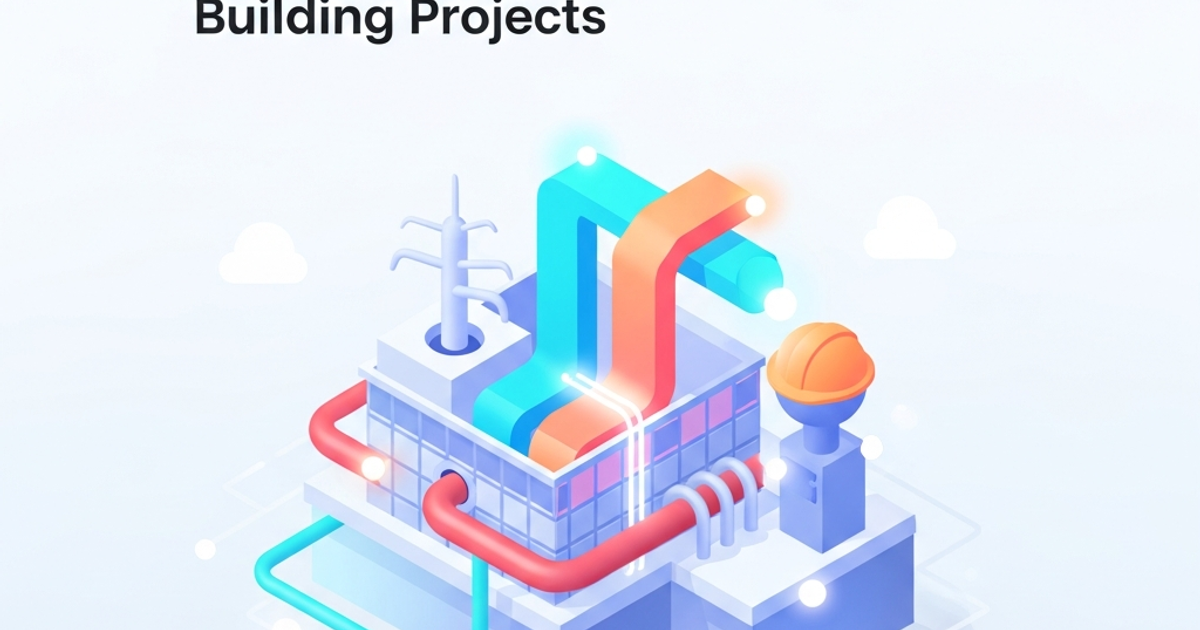
MEP Coordination: The Secret Sauce of Efficient Building Projects
Ever walked through a newly constructed building and wondered how all those pipes, wires, and ducts fit so perfectly without getting in each other's way? It's not magic; it's a carefully orchestrated process called MEP coordination. And if you're in the Architecture, Engineering, and Construction (AEC) world, understanding this isn't just helpful – it's essential for keeping projects on track, on budget, and free from frustrating clashes.
At "The BIM Blueprint," we're all about digging into the advanced workflows that make modern construction hum. And when it comes to making sure mechanical, electrical, and plumbing (MEP) systems play nicely together, MEP coordination is where the real magic happens. Forget the days of discovering a huge duct running smack-dab through a structural beam after concrete has been poured. That's a recipe for expensive delays and a whole lot of head-scratching.
Why MEP Coordination Matters (More Than You Think)
Think about it: MEP systems are the lifeblood of any building. They bring light, power, water, and air. Without them, a building is just an empty shell. But these systems are complex, with multiple trades involved – HVAC, electrical, plumbing, fire protection, and sometimes even specialized systems like medical gases or data cabling. Each trade has its own design, its own equipment, and its own spatial requirements.
Historically, coordinating these different systems was a painstaking process. Engineers and designers would share 2D drawings, often making assumptions about spatial conflicts. This led to:
- Clashes: Systems occupying the same physical space.
- Rework: Having to redesign or relocate components on-site.
- Delays: Waiting for resolutions to design conflicts.
- Budget Overruns: The direct cost of rework and extended timelines.
- Safety Hazards: Poorly routed systems posing risks during installation or operation.
I remember working on a large hospital project early in my career. We spent countless hours in what felt like endless, often tense, coordination meetings, trying to decipher stacks of paper drawings. It was a miracle if we caught half the issues before construction. The amount of rework required on-site was staggering, impacting not just the schedule but also the morale of the crews.
This is precisely where modern approaches, particularly leveraging Building Information Modeling (BIM), have revolutionized MEP coordination. BIM provides a 3D environment where all building systems can be modeled and analyzed before construction even begins.
You Might Also Like
- Mastering BIM Data: Your Guide to Seamless Managementin Advanced BIM Workflows
- Slash Project Costs: The Power of Reducing Rework with BIMin Advanced BIM Workflows
- Mastering the BIM Coordination Process: Your Key to Project Successin Advanced BIM Workflows
Bringing MEP Coordination into the 3D Realm with BIM
Building Information Modeling (BIM) is a game-changer for MEP coordination. Instead of relying on 2D overlays and educated guesses, BIM allows us to create intelligent, three-dimensional models that represent the actual building and all its components. Here's how it elevates the coordination process:
-
3D Visualization: Imagine seeing your entire HVAC system, all the electrical conduits, and the complex plumbing network laid out in a single, coordinated 3D model. This visual clarity makes it incredibly easy to spot potential clashes. We're talking about seeing if a main duct riser interferes with a structural beam, or if the sprinkler pipe run conflicts with a ceiling-mounted lighting fixture.
-
Clash Detection: This is the superstar feature. BIM software has built-in clash detection tools that automatically scan the integrated model for conflicts between different building systems. You can set up rules and tolerances, and the software will flag every single interference. This allows us to resolve these issues digitally, in the design phase, often with just a few clicks and a conversation between the relevant disciplines.
-
Interdisciplinary Collaboration: BIM platforms facilitate better communication and collaboration. All stakeholders – architects, structural engineers, MEP engineers, and contractors – can work within or reference a common model. This ensures everyone is looking at the same, up-to-date information, fostering a more unified approach to problem-solving.
-
Improved Accuracy and Detailing: With BIM, the level of detail can be significantly increased. Designers can model not just the main components but also the smaller elements, conduits, hangers, and supports. This thoroughness during the design development phase significantly reduces surprises during construction.
-
Quantification and Estimating: A well-coordinated BIM model provides accurate quantities of materials and components. This aids in more precise cost estimating and procurement, helping to keep the project within budget.
We've seen projects where the use of advanced BIM for MEP coordination has led to a dramatic reduction in site clashes – sometimes by as much as 80-90%! This isn't just about saving time; it's about building smarter and more efficiently. It allows the construction team to focus on installation, not on deciphering complex, conflicting plans.
The Practical Application: From Design to the Field
The benefits of robust MEP coordination extend far beyond just avoiding clashes. When done effectively using BIM, it directly impacts the constructability and long-term performance of the building.
Streamlined Installation
Once the design is clash-free in the BIM model, the resulting information can be used to generate highly detailed shop drawings and fabrication models. This means prefabrication of components off-site becomes much more feasible and accurate. Imagine factory-assembled ductwork or pipe racks that are guaranteed to fit. This not only speeds up on-site installation but also improves quality control and safety.
Enhanced Facility Management
The coordinated BIM model doesn't disappear once construction is complete. It can be handed over as an
BIM Era Engineering Team
Expert insights and analysis to keep you informed and ahead of the curve.