Hey everyone, and welcome back to The BIM Blueprint! Today, we're diving deep into something absolutely crucial for making Building Information Modeling (BIM) truly work for you: BIM data management best practices. We all know BIM is a game-changer, right? It's not just about 3D models anymore. It's about a rich, intelligent database that informs every stage of a project, from the first sketch to the last nail hammered, and even beyond into facility management. But here's the kicker: if that data isn't organized, accessible, and accurate, BIM can quickly become more of a headache than a help.
Think about it. I remember working on a large healthcare project a few years back. The architect had amazing designs, the structural engineers had precise calculations, but the MEP (mechanical, electrical, and plumbing) team was struggling. They were receiving updated model versions almost daily, and each time, crucial data – like equipment tags, power requirements, and duct sizes – seemed to get lost or overwritten. It was a data nightmare, leading to costly clashes on site and significant delays. This wasn't a problem with BIM itself, but with how the data within the BIM environment was being handled.
That experience really hammered home the importance of having solid data management strategies in place from day one. It’s about creating a system that ensures information flows smoothly, is consistently formatted, and is readily available to everyone who needs it, when they need them.
Building a Foundation: Data Standards and Protocols
Before you can even think about managing your BIM data effectively, you need a solid framework. This starts with establishing clear data standards and protocols. This isn't the most glamorous part of BIM, I'll admit, but trust me, it’s the bedrock of everything that follows. Without it, you're building on shaky ground.
What do I mean by standards? It's about deciding how information will be structured and named. This includes:
- Information Delivery Manuals (IDM) and Model Element Templates (METs): These define what information needs to be included for specific elements (like a door or a window) at different project stages. For example, a door in the early design phase might only need basic dimensions and fire rating, while the same door during construction needs detailed manufacturer, installation date, and warranty information.
- Naming Conventions: Consistent naming for files, objects, layers, and parameters is non-negotiable. Imagine searching for a specific piece of equipment and finding fifty variations of its name – "AHU-1", "Air Handling Unit 1", "Main AHU", "1st AHU". It’s a recipe for confusion. Setting a standard like
[Discipline]-[System]-[ElementID]-[Status](e.g.,MEP-HVAC-AHU01-Design) makes finding things so much easier. - Data Dictionaries and Taxonomies: Having a centralized glossary of terms and a classification system (like UniClass or OmniClass) ensures everyone speaks the same language. This is crucial for interoperability and for making sure data can be analyzed and queried effectively.
Establishing these upfront, often within the BIM Execution Plan (BEP), is critical. It's a collaborative effort involving all project stakeholders. Getting buy-in early means everyone understands the rules of the game and the benefits of playing by them. This proactive approach is a cornerstone of successful BIM data management best practices.
You Might Also Like
- Slash Project Costs: The Power of Reducing Rework with BIMin Advanced BIM Workflows
- Mastering the BIM Coordination Process: Your Key to Project Successin Advanced BIM Workflows
- MEP Coordination: The Secret Sauce of Efficient Building Projectsin Advanced BIM Workflows
Streamlining Workflows: Collaboration and Technology
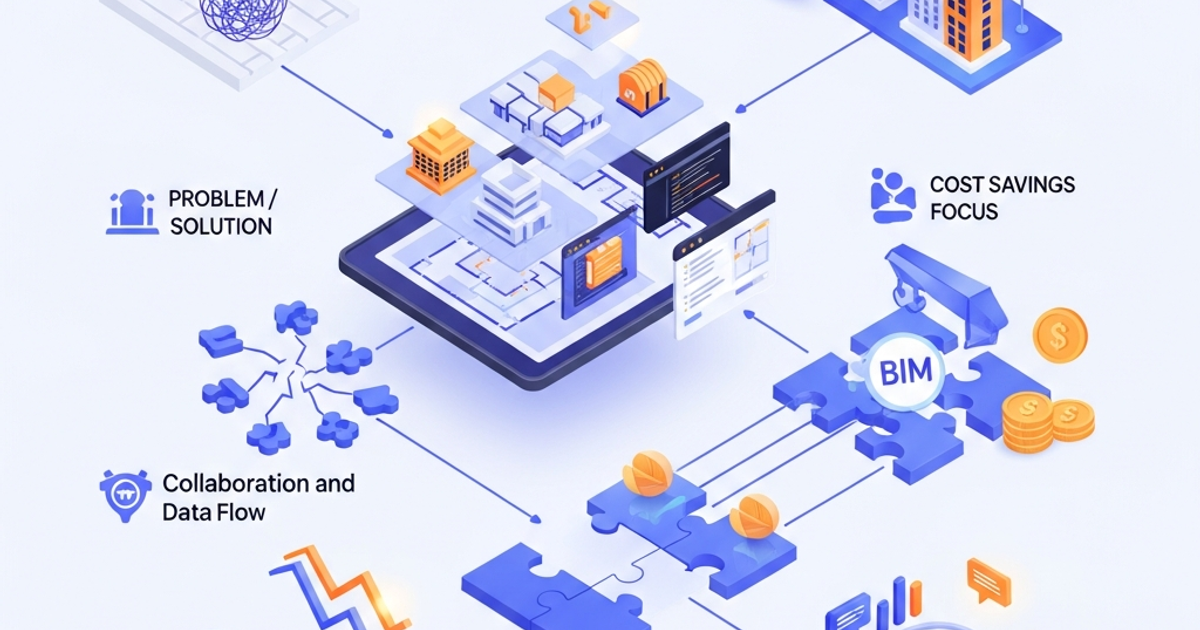
Once your standards are in place, the next big challenge is implementing them within your project workflows. This is where collaboration and the right technology really shine. BIM is inherently a collaborative process, and managing its data effectively requires tools and strategies that facilitate this teamwork.
- Common Data Environments (CDEs): A CDE is your central hub for all project information. Think of it as a secure, cloud-based repository where everyone can access the latest models, documents, and data. Platforms like Autodesk Construction Cloud, Bentley ProjectWise, or Trimble Connect are examples of CDEs that help manage access, version control, and workflows. Using a CDE prevents those “which version is the latest?” arguments and ensures everyone is working from the same, up-to-date information.
- Version Control: This ties directly into the CDE. When you have multiple teams working on the same model, it's vital to track changes, understand who made them, and be able to revert to previous versions if needed. Robust version control prevents data loss and helps in auditing and conflict resolution.
- Interoperability and Data Exchange: The ability for different software to talk to each other is key. While proprietary formats exist, standards like IFC (Industry Foundation Classes) are vital for exchanging data between various BIM platforms (e.g., Revit to Navisworks, or ArchiCAD to Solibri). Ensuring your data is exported and imported correctly, adhering to your defined standards, is paramount. I’ve seen projects where incompatible data formats led to hours of manual reformatting or, worse, the omission of critical information.
- Automated Data Validation: Manually checking every piece of data for compliance with standards can be incredibly time-consuming and prone to error. Implementing tools that can automatically check models against your defined rules and standards can save immense time and improve data quality. Think of it as an automated quality control system for your BIM data.
When these elements work together, you create a collaborative environment where data is not only managed but actively enhanced throughout the project lifecycle. This smooth flow of information is what unlocks the true potential of BIM.
Keeping it Clean: Data Quality and Maintenance
Finally, let’s talk about keeping your data clean and useful, not just during the project but long after handover. Poor data quality is like a ticking time bomb, ready to derail your facility management efforts or cause issues on future projects. Implementing BIM data management best practices means thinking about data quality from the outset and continuing this focus throughout the project lifecycle.
- Regular Audits: Schedule regular checks of your model data against your established standards. Are parameters filled out correctly? Are naming conventions being followed? Are there duplicate elements or excessive data bloat? Catching these issues early is much easier than trying to fix them months down the line.
- Data Enrichment: BIM data isn't static. As a project progresses, more information is added and refined. Think about enriching your model with manufacturer data, maintenance schedules, warranty information, and operational procedures. This makes the BIM model a valuable asset for facility managers, not just a design document.
- Training and Upskilling: Don't underestimate the human element. Your team needs to understand why these data management practices are important and how to implement them. Ongoing training and knowledge sharing are crucial. When everyone on the team understands their role in maintaining data integrity, the entire process becomes much smoother.
Taking these steps ensures that your BIM data remains a reliable, valuable resource throughout the entire asset lifecycle. It’s an investment that pays dividends in efficiency, cost savings, and reduced risk.
So, there you have it – a look at some key BIM data management best practices. It’s not just about technology; it’s about people, processes, and a commitment to quality. By establishing clear standards, leveraging collaborative technology, and prioritizing data quality, you can transform your BIM implementation from a complex undertaking into a powerful engine for project success. What are your biggest data management challenges? Share your thoughts in the comments below! We love hearing from you here at The BIM Blueprint.
BIM Era Engineering Team
Expert insights and analysis to keep you informed and ahead of the curve.