Beyond Blueprints: Unlocking Project Success with 4D BIM
Remember that project where the plumbing seemed to materialize before the walls were even framed? Yeah, we’ve all been there. Misaligned schedules, clashes that cause costly delays, and that nagging feeling that things could have gone smoother. It’s the kind of chaos that can turn even the most seasoned construction professional’s hair gray.
But what if I told you there’s a way to see your entire project’s life unfold before a single shovel hits the ground? A way to not just model the building, but to model its construction sequence? That’s where the magic of 4D BIM comes in.
For those of us immersed in the world of AEC, BIM (Building Information Modeling) is already a game-changer. It’s about creating intelligent 3D models packed with data. But BIM itself is just the design. The real challenge, the real artistry, lies in bringing that design to life, on time and on budget. And that’s precisely what adding that fourth dimension – time – achieves.
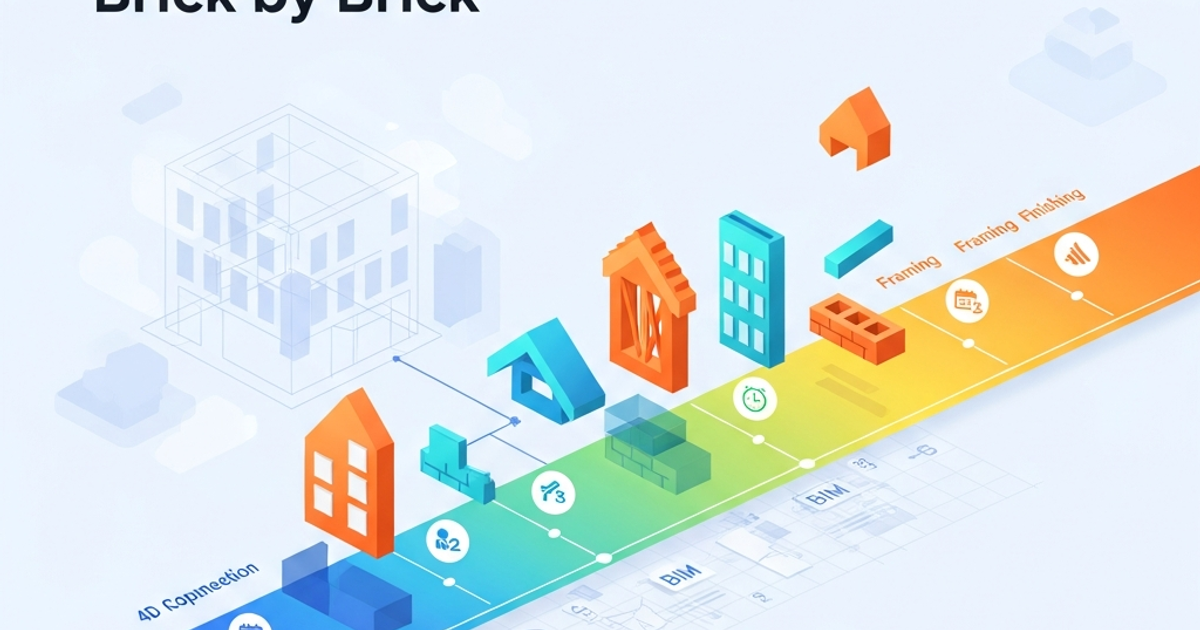
Think of it this way: your 3D BIM model is the anatomy of the building – the structure, the systems, the finishes. 4D BIM adds the circulatory system, the heartbeat, the process. It’s a powerful visual tool that links project schedule information (like Gantt charts) directly to the 3D model components. The result? A dynamic, animated simulation of your construction sequence.
Visualizing the Unseen: How 4D BIM Transforms Planning
I remember working on a complex hospital expansion a few years back. The sheer number of specialized systems – medical gases, intricate HVAC, advanced IT infrastructure – meant the coordination alone was a monumental task. The initial 2D schedules were dense and frankly, overwhelming. We decided to implement a 4D BIM workflow.
Suddenly, we could see the phasing. We could simulate the erection of structural steel, the installation of MEP systems within specific zones, and the completion of finishes, all tied to our Primavera P6 schedule. It wasn't just about looking at a Gantt chart anymore. We could literally watch the building come together, virtually. This visual clarity had several profound impacts:
- Early Clash Detection (Beyond Spatial): Sure, 3D BIM is great for spotting spatial clashes. But 4D BIM takes it a step further. We could identify temporal clashes – situations where a task was scheduled to happen before its prerequisite was complete, or when two critical path activities were slated to occur simultaneously in the same limited space. This saved us countless hours of rework and frustration.
- Improved Logistics and Site Management: Visualizing the construction sequence allowed us to plan crane placement, material laydown areas, and site access much more effectively. We could see exactly where temporary structures would be needed and for how long, optimizing the use of our limited site footprint.
- Enhanced Stakeholder Communication: Trying to explain a complex construction phasing plan to a hospital administrator using a Gantt chart is like trying to explain quantum physics using interpretive dance. With 4D BIM, we could simply show them. Walking through the animated construction sequence, highlighting key milestones and potential challenges, made everyone – from the client to the subcontractors – feel more informed and aligned.
- Risk Mitigation: By simulating the construction process, we could anticipate potential bottlenecks and proactively develop mitigation strategies. For instance, we identified a period where multiple critical MEP installations were scheduled concurrently in a tight space. The 4D model allowed us to re-sequence those tasks, avoiding a potential major delay.
This wasn't just about making pretty animations. It was about leveraging a powerful simulation tool to make smarter, data-driven decisions. The ability to run different construction scenarios and compare their timeline impacts became invaluable. We could ask 'what if' questions and get tangible answers derived directly from our project plan and model.
You Might Also Like
- Mastering BIM Data: Your Guide to Seamless Managementin Advanced BIM Workflows
- Slash Project Costs: The Power of Reducing Rework with BIMin Advanced BIM Workflows
- Mastering the BIM Coordination Process: Your Key to Project Successin Advanced BIM Workflows
From Simulation to Reality: Implementing 4D BIM
Getting started with 4D BIM might sound daunting, but it’s more accessible than you think. The core components are:
- A Comprehensive 3D BIM Model: This is your foundation. The model needs to be detailed enough to represent the different building components and systems accurately. LOD (Level of Development) is key here – you need enough geometric and data richness to link elements to schedule tasks.
- Project Schedule Data: This typically comes from scheduling software like Microsoft Project, Primavera P6, or even a well-structured Excel file. Crucially, each task in the schedule needs to be clearly defined and linked to specific elements within the BIM model.
- 4D BIM Software: Several software platforms are available that specialize in linking 4D models and schedules. These tools import your 3D model and schedule data, allowing you to establish the links and generate the animated simulation. Popular options include Autodesk Navisworks, Synchro, and others.
The process usually involves:
- Model Preparation: Ensuring your 3D model is clean, organized, and contains the necessary data. Assigning unique IDs to model elements is often helpful.
- Schedule Import and Task Linking: Importing your project schedule and then meticulously linking each task (e.g., 'Install South Wall Cladding', 'Pour Level 3 Slab') to the corresponding element(s) in the 3D model.
- Simulation Generation: Once the links are established, the software generates the time-based animation, showing elements appearing or changing status according to their scheduled dates.
- Analysis and Iteration: This is where the real value lies. Reviewing the simulation, identifying potential issues, optimizing the sequence, and re-running the simulation until a viable plan emerges. Don't forget to involve your key trade partners in this review process – they often have invaluable insights.
It’s important to remember that 4D BIM isn't a magic wand. It requires commitment, collaboration, and a willingness to adapt workflows. The quality of the output is directly dependent on the quality of the input – a poorly constructed model or an inaccurate schedule will lead to a flawed simulation. But when done right, the benefits are immense. It fosters a deeper understanding of the project’s construction phasing, leading to more accurate cost estimations, improved resource allocation, and a significantly reduced risk profile. For me, it’s become an essential part of tackling complex projects, turning potential headaches into predictable progress.
Integrated Project Delivery (IPD) principles often align beautifully with 4D BIM, as both emphasize early collaboration and shared understanding. Exploring construction sequencing visually can also dramatically improve risk management on site. Ultimately, embracing 4D BIM is about moving from reactive problem-solving to proactive, intelligent project delivery. It’s about building smarter, not just bigger.
BIM Era Engineering Team
Expert insights and analysis to keep you informed and ahead of the curve.