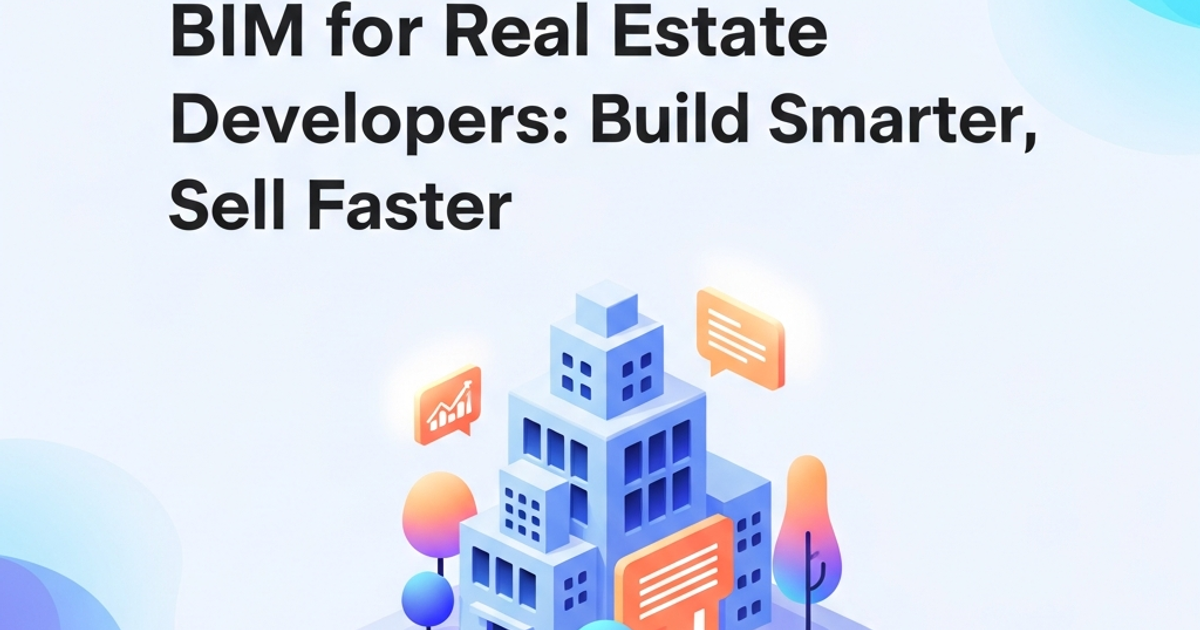
BIM for Real Estate Developers: Build Smarter, Sell Faster
Let's be honest, the real estate development world moves fast. From initial concept to groundbreaking, and then to handing over keys, every phase is a race against time and budget. For a long time, many of us in development relied on 2D drawings, endless spreadsheets, and a healthy dose of "hope for the best." But what if there was a way to gain crystal-clear visibility, minimize costly surprises, and ultimately, create more value from your projects?
That's where Building Information Modeling, or BIM, comes in. If you're a real estate developer, thinking BIM is just for architects and contractors is like thinking a smartphone is just for making calls. It’s a powerful tool that can revolutionize how you approach your entire project lifecycle.
The Old Way vs. The BIM Way
Remember those days of sifting through stacks of blueprints, trying to spot a potential clash between a plumbing line and a structural beam? Or that sinking feeling when a client requested a design change late in the game, triggering a domino effect of costly rework?
I've been there. We once had a project where a minor change to a facade element cascaded into significant structural and MEP (mechanical, electrical, plumbing) revisions. The delays and budget overruns were painful. If we’d had a robust BIM model back then, we could have visualized that change, assessed its impact, and made informed decisions before any earth was moved.
BIM flips this script. Instead of static 2D lines, you get a dynamic, intelligent 3D model containing rich data about every component of your building. Think of it as a digital twin, a virtual representation of your project that evolves from design through construction and into operation. For real estate developers, this means moving from reactive problem-solving to proactive decision-making.
You Might Also Like
- The Future of AEC: How BIM is Revolutionizing the Industryin Industry Insights
- Unlock the ROI of BIM Implementation: More Than Just Softwarein Industry Insights
- Cloud BIM Collaboration: The Future of AEC Project Successin Digital Construction
Boosting Your Bottom Line with BIM
So, how does this translate into tangible benefits for your business?
- Enhanced Design & Visualization: Imagine presenting a photorealistic, interactive 3D walkthrough of your proposed development to investors or potential buyers before construction even begins. BIM makes this possible. You can explore design options, test different material finishes, and even simulate natural light. This level of visualization is incredibly persuasive and helps secure funding and pre-sales faster. Developers using BIM for real estate developers gain a significant edge in marketing and sales.
- Cost Control & Risk Mitigation: One of the biggest headaches in development is budget creep. BIM’s clash detection capabilities are a game-changer. The software can identify conflicts between different building systems (like HVAC ducts running through beams) early in the design phase. Resolving these issues digitally is exponentially cheaper than fixing them on-site. This proactive approach significantly reduces the likelihood of costly change orders and delays, protecting your profit margins. Accurate quantity take-offs directly from the model also improve cost estimation accuracy.
- Streamlined Construction: While you might not be swinging the hammers yourself, a well-executed BIM model provides your general contractor with a clear roadmap. It reduces ambiguity on site, leading to fewer RFIs (Requests for Information) and a smoother construction process. This means projects get built faster and more efficiently, getting you to market sooner.
- Improved Facility Management: The value of BIM doesn't stop when construction ends. The data embedded within the model – think maintenance schedules, system specifications, warranty information – can be handed over to the building owner or facility management team. This creates a comprehensive digital record, simplifying ongoing operations, maintenance, and future renovations. This data asset adds long-term value to the property.
- Better Collaboration: In traditional workflows, information often gets lost in translation between disciplines. BIM platforms facilitate better communication and collaboration among architects, engineers, contractors, and even consultants. Everyone works from the same, up-to-date information model, reducing errors and misunderstandings. This improved project collaboration is crucial for complex developments.
Getting Started with BIM: It's Not as Daunting as You Think
I understand the hesitation. Adopting new technology can seem overwhelming. You might be thinking about software costs, training, and integrating BIM into your existing processes. But the key is to start strategically.
- Educate Yourself and Your Team: Understand the core principles of BIM and how it can specifically benefit your development business. Attend webinars, read case studies (like this one!), and encourage your key stakeholders to learn.
- Start Small: You don't need to implement a full-scale BIM mandate overnight. Begin by requiring BIM deliverables for a specific aspect of a project, perhaps for design coordination or quantity take-offs. Gradually increase its use as your team gains experience.
- Partner Wisely: Collaborate with design consultants and contractors who are already proficient in BIM. Their expertise can help guide your initial projects and demonstrate the value firsthand. Look for partners who understand the needs of real estate developers.
- Focus on Data: Remember, BIM is about the information in the model, not just the 3D geometry. Define what data is important for your decision-making process early on.
BIM is more than just a software trend; it’s a fundamental shift in how buildings are conceived, designed, built, and managed. For real estate developers, embracing BIM for real estate developers isn't just about staying current; it's about gaining a competitive advantage. It's about building better projects, reducing risk, increasing efficiency, and ultimately, maximizing the return on your investment. Isn't it time you updated your blueprint for success?
BIM Era Engineering Team
Expert insights and analysis to keep you informed and ahead of the curve.