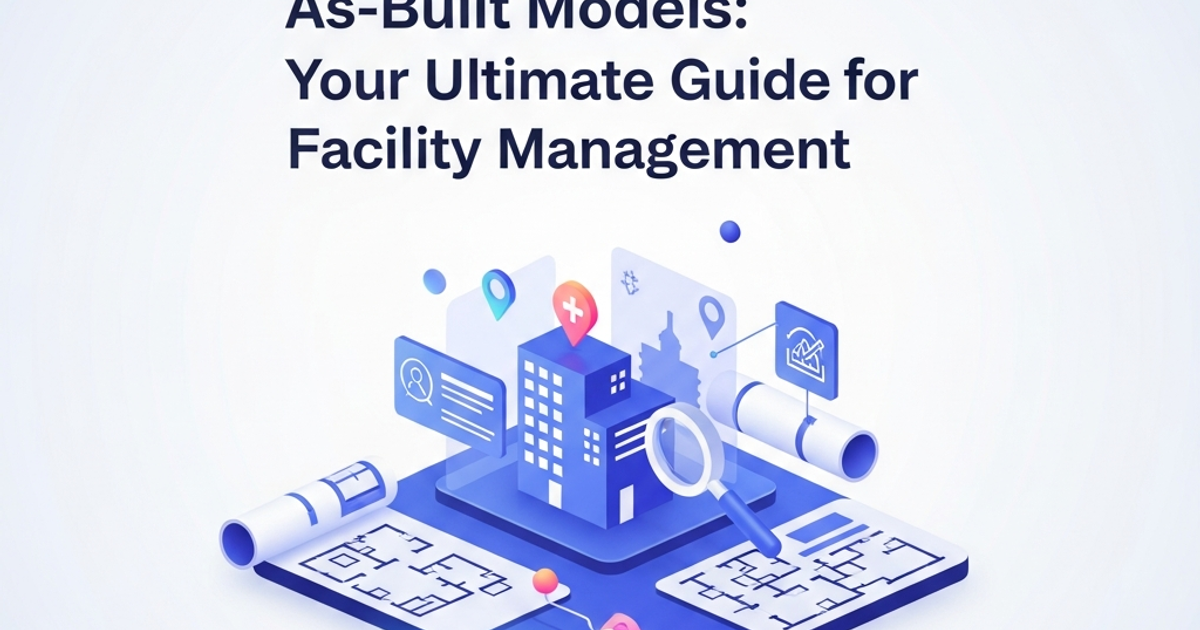
As-Built Models: Your Ultimate Guide for Facility Management
Ever feel like you’re navigating a maze with incomplete blueprints? As facility managers, we often inherit buildings where the actual construction doesn’t quite match the original plans. This gap between design and reality can lead to a cascade of headaches – from locating critical infrastructure to planning renovations. That’s where as-built models come in, acting as the definitive record of what was actually built.
Think of it this way: the initial design documents are like a recipe. They lay out the ingredients and steps. But during cooking, you might tweak a seasoning, add an extra pinch of something, or find you have to substitute an ingredient. The final dish, as prepared, is what you serve. An as-built model is the BIM equivalent of documenting that final, as prepared dish, ensuring everyone involved knows exactly what’s in it and where everything is.
In the fast-paced world of Architecture, Engineering, and Construction (AEC), the transition from design to construction to operations is often where critical information gets lost. Construction teams make real-time decisions on site, encountering unforeseen issues and implementing solutions. These changes, however minor they seem at the time, can significantly alter the building's final state. Without a mechanism to capture these deviations, the original design documents quickly become outdated, leading to inefficiencies and potential risks.
Bridging the Gap: From Design to Reality
This is precisely the problem as-built models solve. They are updated versions of design models, reflecting all changes made during the construction phase. This isn't just about updating a few lines on a drawing; it's about creating a comprehensive digital twin that accurately represents the physical asset. This includes:
- Exact spatial locations of all building components (walls, doors, windows, MEP systems, etc.)
- Material specifications as installed
- Record of any deviations from the original design, including reasons and approvals
- Information on systems and equipment that were modified or added during construction
I remember a project where a crucial HVAC duct had to be rerouted during construction due to an unexpected structural beam. The original plans showed it going one way, but the site team had to reroute it slightly. It was a small change, but without a proper update to the documentation, the facility management team later spent days trying to trace the ductwork for a simple repair, causing significant downtime for that section of the building. A well-maintained as-built model would have saved them that hassle.
Why As-Built Models are a Facility Manager's Best Friend
For facility managers, the value of accurate as-built documentation cannot be overstated. It’s the foundation for efficient and effective building operations. Here’s how:
- Informed Decision-Making: When you need to plan maintenance, repair a system, or undertake a renovation, having an accurate representation of the building is paramount. As-built models provide the precise location and specifications of everything from a hidden pipe to an electrical panel, allowing for better planning and execution.
- Reduced Risk and Downtime: Misinformation about building systems can lead to costly errors, safety hazards, and extended operational disruptions. For instance, knowing the exact location of a fire sprinkler line before drilling into a wall is critical for safety and preventing water damage.
- Streamlined Operations and Maintenance: Imagine a new team member needing to understand a complex building system. With an as-built model, they can quickly grasp the layout, component locations, and interconnections, significantly speeding up onboarding and improving their ability to perform tasks.
- Accurate Asset Management: The model serves as a comprehensive inventory of building assets, including their specifications, warranty information, and maintenance history. This is invaluable for lifecycle management and future capital planning.
- Efficient Space Planning and Utilization: Understanding the actual, as-built dimensions and layouts helps in optimizing space utilization, planning for future expansions, or reconfiguring existing areas.
You Might Also Like
- BIM for Facility Management: Your Ultimate Guidein Facility Management
- Cloud BIM Collaboration: The Future of AEC Project Successin Digital Construction
- Virtual Construction: The Future of Building, Today!in Digital Construction
The Journey to an Accurate As-Built Model
Creating and maintaining an as-built model isn't a one-time task; it’s an ongoing process that starts from the initial design phase and continues through construction and handover. It requires collaboration and a commitment to updating information as changes occur.
- Digital Capture During Construction: Technologies like laser scanning (LiDAR) and photogrammetry are increasingly used during construction to capture the as-built conditions of specific elements or the entire project at various stages. This data can then be used to update the BIM model.
- Regular Model Updates: Site teams and project managers must be diligent about documenting changes as they happen. This could involve updating BIM software directly or feeding information into a central repository that is used to update the master model.
- Formal Handover Process: A critical step is the formal handover of the finalized as-built model from the construction team to the facility management team. This handover should include a thorough review and verification process to ensure accuracy.
- Leveraging the Model Post-Handover: Once in the hands of facility managers, the as-built model becomes a living document. It should be integrated with Computer-Aided Facility Management (CAFM) or Building Management Systems (BMS) for a truly connected operational environment. Any further modifications or upgrades made during the building's lifecycle should also be reflected in the model.
A Practical Example: The University Dorm Renovation
Let’s consider a hypothetical scenario: a university undertaking a major renovation of an older student dormitory. The original blueprints are decades old and don’t reflect subsequent upgrades to plumbing, electrical, or the addition of new network cabling. During the renovation, the construction team discovers that the existing wall cavities are much tighter than anticipated and require significant re-routing of new services.
Without an as-built model, the facilities team would be left guessing about the final configuration after the renovation. However, if the construction team diligently updated a BIM model throughout the project, incorporating scan data and as-built annotations, the handover would provide:
- An accurate 3D representation of all newly installed electrical conduits, plumbing lines, and HVAC ductwork within the refreshed walls.
- Clear labeling of all new equipment and their precise locations.
- Documentation of any firestopping measures implemented around new penetrations.
This detailed as-built information allows the university’s facilities department to perform future maintenance, troubleshoot issues, and plan for subsequent upgrades with confidence, avoiding the costly guesswork that plagues many older buildings. This detailed digital record is key to achieving operational excellence and maximizing the lifespan of the asset.
In essence, as-built models are more than just updated drawings; they are the comprehensive, digital DNA of a building, ensuring that what you operate is precisely what you think you are operating. Embracing this practice is a fundamental step towards smarter, more efficient facility management in the modern AEC landscape.
BIM Era Engineering Team
Expert insights and analysis to keep you informed and ahead of the curve.