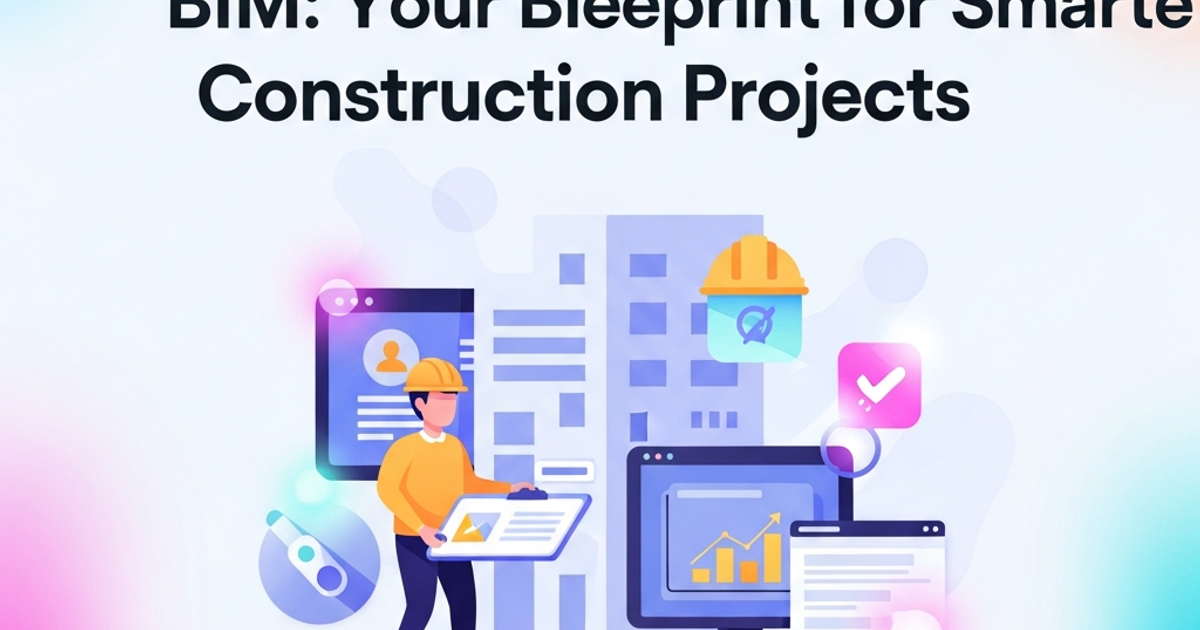
BIM: Your Blueprint for Smarter Construction Projects
Ever feel like construction projects are a bit like assembling a giant, impossibly complex puzzle without the picture on the box? You've got hundreds, maybe thousands, of pieces – blueprints, specs, different trades, schedules, budgets – and somehow, they all need to fit perfectly. For years, that often meant a lot of guesswork, miscommunication, and costly rework. But what if there was a better way? Enter Building Information Modeling, or BIM.
Think of BIM not just as software, but as a smart, digital process. It's a way to create and manage detailed 3D models of a building or infrastructure project throughout its entire lifecycle. But it's so much more than just a pretty 3D drawing. It's a rich database of information, a collaborative hub, and frankly, a game-changer for the Architecture, Engineering, and Construction (AEC) industry.
I remember working on a hospital renovation project a few years back. We were trying to fit new HVAC systems into existing, cramped spaces. The traditional 2D drawings just weren't cutting it. We spent days debating duct routing, potential clashes with plumbing, and how it would affect ceiling heights. When we finally adopted a BIM approach for the design phase, it was like a lightbulb went off. We could see the clashes in the model before a single shovel hit the dirt. We could virtually walk through the space, test different layouts, and resolve conflicts digitally. The time and money saved were incredible.
This isn't science fiction; it's the reality that construction technology like BIM is bringing to us. It’s about moving beyond static documents to dynamic, intelligent models.
Designing with Precision and Foresight
The design phase is where BIM truly shines. Instead of flat, disconnected drawings, architects, engineers, and designers work within a shared, intelligent 3D model. Every element – walls, doors, windows, pipes, structural beams – is a modeled object with associated data. This means:
- Clash Detection: This is the magic trick everyone talks about. BIM software can automatically identify where different building systems (like electrical conduits running through proposed structural beams) physically conflict. Imagine finding out your main water line is going right through where the elevator shaft needs to be – on your computer, not during the actual build. This proactive problem-solving drastically reduces costly on-site changes and delays.
- Enhanced Visualization: Seeing a complex building in 3D is so much more intuitive than deciphering multiple 2D plans. Stakeholders, even those without deep technical backgrounds, can better understand the design intent. This leads to clearer communication and fewer misunderstandings.
- Data-Rich Models: Beyond geometry, BIM models contain crucial information about materials, costs, energy performance, and more. This allows for more informed design decisions, like selecting sustainable materials or optimizing building performance from the outset.
- Faster Iteration: Need to change a window size or reconfigure a floor plan? In a BIM environment, these changes can be made quickly and the impact across the entire model is instantly updated. This agility is invaluable in the fast-paced design world.
Using BIM from the start fosters a level of accuracy and collaboration that was previously unattainable. It sets a solid foundation for the entire project, minimizing surprises down the line.
You Might Also Like
- Virtual Construction: The Future of Building, Today!in Digital Construction
- Building Greener with BIM: Your Guide to Sustainable Constructionin Digital Construction
- BIM for Small Firms: Your Smart Path to Big Project Successin Digital Construction
Streamlining the Build: From Model to Reality
Once the design is finalized, the BIM model doesn't just get shelved. It becomes a powerful tool for the construction phase. This is where the practical application of advanced construction technology truly takes hold, impacting everything from scheduling to execution:
- 4D Scheduling (Time): BIM models can be linked to project schedules. This 4D BIM visualization allows teams to see how the building will be constructed over time, step-by-step. It helps identify potential logistical challenges, optimize construction sequencing, and communicate the construction plan effectively to the entire site team. Seeing a virtual build sequence can highlight potential site congestion or the need for specific crane time, preventing delays before they occur.
- 5D Cost Estimation (Cost): By linking quantity take-offs directly from the model to cost databases, BIM enables highly accurate and dynamic cost estimation. As the design evolves, the cost implications are immediately visible, providing real-time budget tracking and control. This transparency is a breath of fresh air for project managers constantly juggling budgets.
- Improved Site Logistics: Understanding site layout, material staging areas, and access routes through the BIM model can significantly improve on-site efficiency and safety.
- Prefabrication and Modular Construction: BIM is a natural fit for off-site prefabrication. Precise models ensure that components manufactured in a factory will fit perfectly on-site, improving quality control and reducing on-site labor time.
- Reduced Rework: As mentioned, identifying clashes and resolving design issues in the model significantly cuts down on the expensive and time-consuming rework that plagues many traditional projects.
This transition from digital design to physical construction is where BIM proves its immense value, turning theoretical plans into tangible, efficient progress. The integration of construction technology makes the entire build process more predictable and manageable.
The Long Game: Facility Management and Beyond
But BIM's influence doesn't stop when the building is complete. The information-rich model created during design and construction becomes an invaluable asset for facility management and operations throughout the building’s lifespan. This is often called the “digital twin” concept.
- As-Built Information: The final BIM model accurately reflects the building as it was constructed, including all systems, components, and their locations. This is gold for maintenance teams.
- Efficient Maintenance: Facility managers can use the BIM model to quickly locate specific equipment, access maintenance manuals, track service history, and schedule repairs. Imagine needing to fix a specific pump in a complex mechanical room – instead of hunting through dusty paper manuals, you can pull up the exact pump in the BIM model, see its specifications, and find its maintenance log instantly.
- Space Management: Understanding how spaces are utilized and the systems that serve them aids in efficient space planning, renovations, and emergency response planning.
- Performance Monitoring: Integrating real-time data from building systems (like HVAC, lighting, and security) into the BIM model allows for continuous performance monitoring and optimization, leading to energy savings and improved occupant comfort.
- Future Renovations: When it's time for a renovation or upgrade, the existing BIM model provides a perfect starting point, ensuring new work integrates seamlessly with existing structures and systems.
This continuous lifecycle approach, powered by robust construction technology, ensures that the value generated by BIM extends far beyond the initial build, delivering long-term operational efficiencies and cost savings.
Embracing the Future of Construction
Building Information Modeling is more than just a trend; it's a fundamental shift in how we design, build, and manage our built environment. While the initial adoption might require investment in software and training, the long-term benefits – reduced costs, improved efficiency, fewer errors, enhanced collaboration, and better building performance – are undeniable. For anyone involved in the AEC industry, understanding and implementing BIM isn't just advantageous; it's becoming essential for staying competitive and delivering successful projects.
The integration of construction technology like BIM is paving the way for a more intelligent, sustainable, and efficient future in building.
BIM Era Engineering Team
Expert insights and analysis to keep you informed and ahead of the curve.